

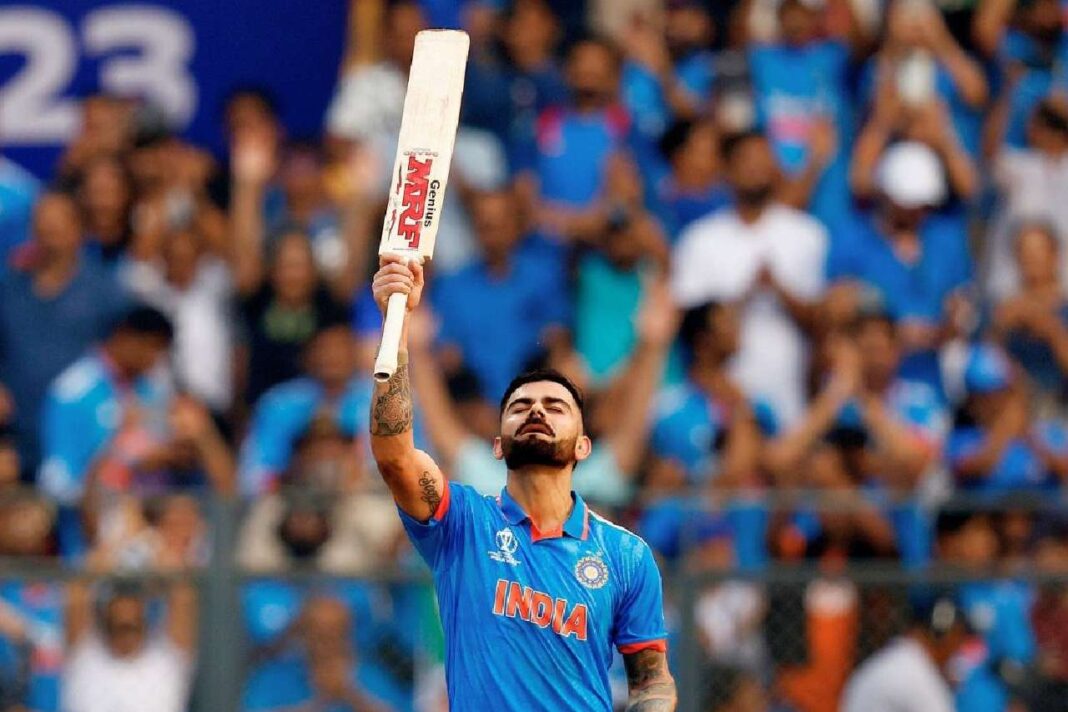

Cricket is often referred to as a religion in India. This term is used so frequently that it has become a part of the country’s cultural lexicon. India’s connection to cricket is celebrated worldwide, and the sport is seen as more than just a game—it’s a source of national pride. However, recent events during the 2023 Cricket World Cup challenge this narrative. The empty stands at many of the tournament’s matches suggest that India’s passion for cricket may not be as universal as many would think. Rather than the national obsession it is often portrayed as, it may be more accurate to say that Indian fans are passionate about Indian cricket, and not necessarily the sport itself.
The 2023 Cricket World Cup, which began in India, has provided a lens through which to view this issue. The tournament, the pinnacle of one-day international cricket, was expected to draw massive crowds, especially given India’s prominent role in the sport. Yet, for much of the early phase of the tournament, stadiums remained conspicuously empty. Even when the teams of cricketing powerhouses like England, New Zealand, and Pakistan were playing, the turnout was less than anticipated.
Take the opening match between England and New Zealand at the Narendra Modi Stadium in Ahmedabad. This game saw Rachin Ravindra, a 23-year-old cricketer from New Zealand, marking his World Cup debut with a stunning century. It was a moment that should have been celebrated not just by New Zealanders, but by cricket fans around the world. But as Ravindra raised his bat in jubilation, his achievement was largely witnessed by empty seats rather than a bustling crowd. The same scene repeated itself the following day with the Pakistan vs Netherlands game in Hyderabad, and in other matches such as Bangladesh vs Afghanistan.
The issue was not a lack of interest in the games themselves, but rather that the matches didn’t involve India. When India finally played their game against Australia in Chennai, the stadium was packed, but even then, the full turnout only occurred in the evening when India was batting. Why is it that India’s matches draw large crowds while others struggle to fill the stands?
The situation is made all the more perplexing when we consider the nation’s immense population—1.5 billion people, many of whom are considered “cricket crazy.” The BCCI (Board of Control for Cricket in India), the governing body of Indian cricket, is often seen as a powerful institution, capable of ensuring massive attendance at major cricket events. Yet, during the World Cup, this power seemed to falter, with empty seats in stadiums that would normally be packed for any India-related event.
Critics have pointed to a variety of reasons for the low turnout, with scheduling and mismanagement being the most commonly cited. The timing of the World Cup was poor, with many matches being scheduled in the intense afternoon heat. The ticketing process was also criticized for its inefficiency, and stadiums were reported to be outdated and poorly maintained. These factors likely contributed to the underwhelming attendance at many games.
However, while these criticisms are valid, they only tell part of the story. It is worth considering why, despite these same logistical issues, stadiums are typically filled to capacity when India plays, even in seemingly less significant matches, or in the Indian Premier League (IPL). If the Indian public truly viewed cricket as a religion, as is often claimed, surely they would flock to the stadiums for the World Cup, a rare and significant event in the sport. After all, cricket is often described as being akin to a religion in India, with players like Sachin Tendulkar and Virat Kohli elevated to near-divine status.
To understand this, we need to look at the relationship between cricket and nationalism in India. It seems that the passion for cricket is often more about national pride than the sport itself. When India plays well, especially when they win, the nation rallies around the team. However, when India does not perform well, or when India is not involved in the match, the interest from fans wanes. This sentiment is not exclusive to India; it is common in most nations. However, in India, the intensity of the support seems closely linked to the country’s performance, not the sport as a whole.
This dynamic was evident in the 2011 Cricket World Cup, which India co-hosted and won. While the tournament was largely a success, with most matches drawing large crowds, there were still numerous games that were played in front of empty stands, particularly those that did not feature India. This was not widely discussed at the time, but it was evident that, while the Indian team’s success was celebrated, the broader cricketing spectacle was not always met with the same enthusiasm.
Moreover, when Indian fans do attend matches, there is often a tendency to focus on India’s performance rather than the game itself. A good example of this came during the 2017 Champions Trophy final, where India was struggling against Pakistan. Indian fans, frustrated by the team’s performance, began leaving the stadium midway through the game. Similarly, during last year’s T20 World Cup in Australia, many Indian fans who had purchased tickets for the final—after India’s elimination—were found attempting to resell the tickets or simply did not show up for the match. Even when the game was played between Pakistan and England, a significant number of empty seats could be seen, despite it being a sold-out event.
What this suggests is that, for many Indian fans, the love for cricket is intertwined with a sense of nationalism. Cricket is viewed as a way to express national pride, particularly when the Indian team is successful. This makes the concept of cricket as a religion a bit of a misnomer. Instead, it seems more accurate to say that cricket in India is a vehicle for nationalism, with the sport itself being secondary to the pride in India’s success.
While this may seem harsh or even critical of Indian fans, it is not an indictment of the country’s passion for the sport. In fact, it is an acknowledgment of the complex relationship that India has with cricket. The reality is that while India produces some of the most passionate and dedicated cricket fans in the world, the intensity of their devotion is often contingent on the performance of their national team.
This brings us to a crucial point: other cricketing nations, while also focused on their own teams, do show up for games that do not involve their country. In the ongoing Rugby World Cup in France, for example, even smaller nations like Fiji are seeing their matches sold out. Similarly, past ODI World Cups in England and Australia saw packed stadiums for games that did not feature the host nation. This suggests that while national pride plays a role in sports fandom, genuine love for the sport is what draws fans to international tournaments, even when their team is not playing.
In conclusion, while cricket is indeed a major part of Indian culture, the narrative that it is a religion may be oversimplified. Indian fans are deeply passionate about the sport, but their fervor is often contingent upon the success of the Indian team. Cricket, for many, is a means of expressing nationalism and patriotism. While there is certainly a large and dedicated group of Indian cricket fans who love the game itself, the broader public’s interest in the sport appears to fluctuate based on India’s performance. In this context, the claim that cricket is a religion in India deserves to be re-examined, as it may not be the sport itself that draws millions of fans, but rather the national pride associated with it.