

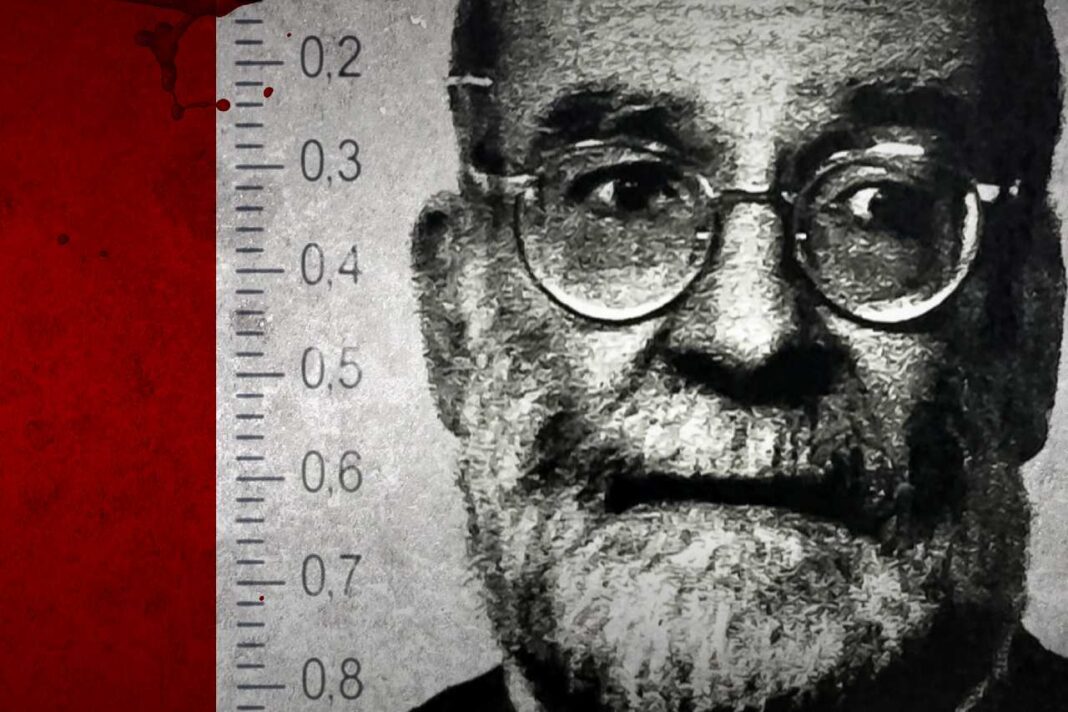

A chilling tale of betrayal, trust, and unspeakable evil, Dr. Harold Shipman’s story stands as one of the darkest chapters in medical history. A man sworn to save lives, Shipman killed over 200 of his patients, creating a legacy of terror. His story serves as a haunting reminder of the dangers hidden within the people we trust the most.
Who Was Dr. Harold Shipman? A Man of Two Faces
Born on January 14, 1946, in Nottingham, England, Harold Shipman’s early life seemed unremarkable. Raised in a middle-class family with a father working as a truck driver and a mother who stayed at home, his childhood appeared typical. But everything changed when Shipman’s mother, Vera, was diagnosed with terminal lung cancer.
Watching his mother suffer through the agony of cancer treatments left a deep impression on him, especially after witnessing the power of morphine to ease her pain. This experience fueled Shipman’s fascination with death and drugs, sparking the darkness that would later consume him.
A Steady Climb: From Medical School to Murderer
Shipman’s academic journey led him to Leeds University, where he pursued medicine. It was here that he met his wife, Primrose, and began carving out a promising future in the medical field. After completing his studies, Shipman became a general practitioner, trusted by the community.
Early in his career, Shipman worked at Pontefract General Infirmary, where colleagues began noticing an unsettling pattern: an unusually high number of patient deaths during his shifts. Despite this, Shipman’s charm and professional demeanor kept suspicions in check. He was a doctor — and as such, beyond question.
How Shipman Killed: A Methodical and Hidden Killer
Dr. Shipman’s method for killing his victims was as cold as it was calculated. His primary targets were elderly women, often living alone and in need of constant care. Shipman would build trust with his patients through personal attention and regular house calls.
Once that trust was established, Shipman would administer fatal doses of morphine or diamorphine to his victims, then falsify death certificates to make it appear that they had died of natural causes. His victims were not just those who were seriously ill, but also those who seemed perfectly healthy, making his actions all the more difficult to detect.
Red Flags Ignored: How Shipman Got Away with Murder
Despite a growing number of suspicious deaths, Shipman continued to evade detection. There were several reasons why his crimes went unnoticed for so long:
1. Unquestionable Authority: As a respected doctor, Shipman was able to exploit the trust placed in him by patients and their families. His status as a medical professional allowed him to avoid suspicion.
2. Lack of Autopsies: Shipman convinced families to cremate the bodies of his victims, destroying any potential evidence that could have linked him to the deaths.
3. Systemic Oversights: Authorities failed to take action despite warning signs. A funeral director had flagged the high death rate among Shipman’s patients, but his concerns were dismissed, allowing the murders to continue for years.
Kathleen Grundy: The Breakthrough That Led to His Downfall
The murder of 81-year-old Kathleen Grundy was the catalyst that finally exposed Harold Shipman. Kathleen, a former mayor of Hyde, had been found dead in her home with Shipman signing her death certificate. However, her daughter, Angela, became suspicious when she discovered that Kathleen’s will had been altered just weeks before her death, making Shipman the sole beneficiary.
Angela’s suspicions prompted an investigation, leading to the exhumation of Kathleen’s body. Toxicology tests revealed a lethal dose of morphine, and this discovery eventually led authorities to uncover the full extent of Shipman’s crimes.
The Trial: A Cold-Blooded Killer in Court
When Shipman’s trial began, his demeanor was one of calm indifference. Throughout the proceedings, he showed no remorse, yawning during questioning and scribbling notes. His lack of emotion added to the chilling nature of his actions, leaving little doubt about the depth of his cold-bloodedness.
In 2004, Shipman was convicted of 15 murders and one attempted murder. Although the official number of victims was 218, many believe the true toll was much higher, possibly as high as 300.
The End of the Road: Shipman’s Death in Prison
Just one day before his 58th birthday, Shipman was found dead in his prison cell, having hanged himself. Some speculated that Shipman’s suicide was timed to ensure his wife, Primrose, would receive his pension benefits. Shipman’s final act was as calculated as his murderous rampage, leaving behind a legacy of sorrow and unanswered questions.
The Inquiry: What We Learned from Shipman’s Crimes
In the wake of Shipman’s conviction, a comprehensive inquiry was launched to determine the full extent of his crimes. The Shipman Inquiry, led by Dame Janet Smith, concluded that Shipman was responsible for at least 218 murders, most of which were elderly women. Some experts believe the actual number of victims could have been much higher.
The inquiry also uncovered significant failures within the medical system, allowing Shipman to continue his reign of terror for years. As a result, new regulations were put in place to prevent such atrocities from happening again.
The Big Question: Why Did Shipman Do It?
The most perplexing question surrounding Harold Shipman’s case is why he committed such heinous acts. Was it an addiction to the power of life and death? Did his mother’s death fuel a twisted obsession with drugs and mortality? Or was he simply a psychopath who used the white coat of a doctor to mask his true nature?
Sadly, Shipman’s death means that the world may never know the full truth about his motivations. However, his story remains a chilling reminder of the evil that can hide behind a trusted exterior.
The Lasting Impact: Lessons We Must Remember
The story of Dr. Harold Shipman forces us to confront uncomfortable truths about trust and authority. It reminds us of the dangers inherent in placing too much faith in individuals, even those who hold positions of power. While safeguards have been implemented to protect against similar tragedies, Shipman’s crimes serve as a haunting reminder that evil can sometimes be disguised as good.
Frequently Asked Questions About Harold Shipman
1. How many people did Shipman kill? The official count stands at 218, but experts believe the true number could be as high as 300.
2. How did Shipman manage to evade detection for so long? Shipman used his position as a trusted doctor to manipulate families, falsify records, and destroy evidence by convincing families to cremate the bodies.
3. What happened to Shipman’s family? Shipman’s wife, Primrose, and their four children supported him during his trial. Little is known about their lives following his death.
4. Could something like this happen again? While regulatory changes have been implemented, Shipman’s case serves as a stark reminder of the dangers of misplaced trust in figures of authority.
Conclusion: A Story of Unthinkable Evil
Harold Shipman’s legacy is one of horror, loss, and betrayal. His crimes serve as a chilling reminder of the dangers of misplaced trust and the ease with which power can be abused. Shipman’s story will never be forgotten, as it forces us to confront the fact that evil can sometimes lurk behind the most trusted faces in society.