

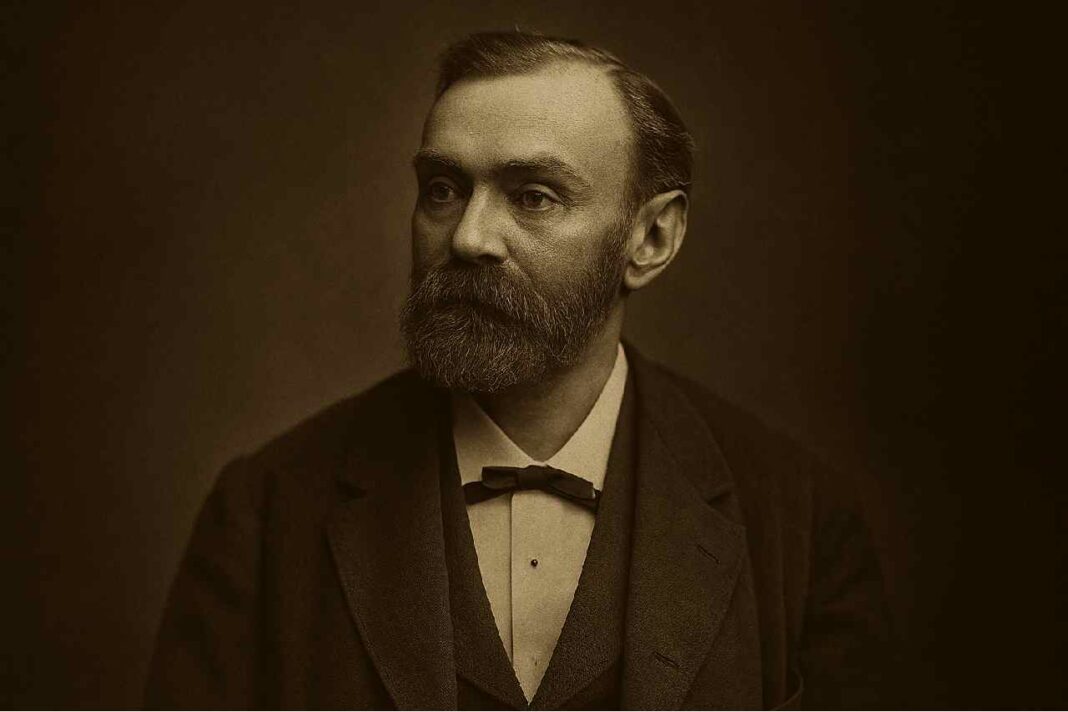

Celebrated as a beacon of human achievement, the Nobel Prize hides an explosive origin story. Its founder, Alfred Nobel, was once called “the merchant of death”—a label that forced him to rethink how he would be remembered. Today, the prize honors excellence in science, literature, and peace, but it was born from guilt, contradiction, and a desperate act of redemption.
Early Life and Ambitious Beginnings
Alfred Bernhard Nobel was born in Stockholm, Sweden, in 1833 into a family of inventors and dreamers. His father, Immanuel Nobel, was a struggling but determined engineer whose creative drive would heavily influence young Alfred.
A gifted chemist, engineer, and businessman, Alfred Nobel held over 350 patents and spoke six languages fluently. By age 24, he was already a recognized inventor. But the creation that would define—and nearly destroy—his legacy was still to come.
The Invention of Dynamite: A Double-Edged Sword
In the midst of 19th-century industrial expansion, Nobel developed dynamite—a safer, more stable version of nitroglycerin that revolutionized mining, construction, and infrastructure.
However, it wasn’t long before dynamite made its way to the battlefield. Despite its original purpose, the explosive became a deadly tool of war. The irony wasn’t lost on Nobel: what he created to build the world was now being used to tear it apart.
The “Merchant of Death” Epiphan
In 1888, Alfred Nobel’s life took a dramatic turn. When his brother Ludvig died, a French newspaper mistakenly published Alfred’s obituary instead. The headline read:
“Le marchand de la mort est mort” — “The merchant of death is dead.”
The obituary condemned Nobel for amassing a fortune from instruments of war. It shook him to his core. Confronted with this grim forecast of how history might remember him, Nobel made a life-altering decision: to dedicate his legacy to peace and progress.
Redemption Through the Nobel Prizes
In 1895, a year before his death, Alfred Nobel wrote a will that shocked even his closest associates. He allocated the vast majority of his fortune to establish a foundation that would award:
- Physics
- Chemistry
- Medicine
- Literature
- Peace
“…to those who, during the preceding year, shall have conferred the greatest benefit to mankind.” — Excerpt from Alfred Nobel’s will
Most tellingly, he included a Peace Prize—a striking gesture from a man whose wealth was built on explosives. He hoped it would celebrate those working to heal the world, not harm it.
The First Nobel Prizes and Global Impact
Alfred Nobel died in 1896. Five years later, in 1901, the first Nobel Prizes were awarded. Although initially met with skepticism, they quickly became the most prestigious honors in the world.
Over time, the Nobel Peace Prize became a symbol of diplomacy, activism, and humanitarian efforts. Past laureates include:
- Martin Luther King Jr.
- Malala Yousafzai
- The International Committee of the Red Cross
However, the award has not been without controversy. The 2009 Peace Prize to Barack Obama, awarded early in his presidency while the U.S. was still involved in military conflicts, sparked widespread debate.
A Legacy Rewritten
Alfred Nobel remains a complicated historical figure. His inventions empowered both progress and destruction, yet his self-awareness and desire for atonement helped reshape that narrative.
By creating the Nobel Prizes, Nobel transformed his legacy from one of violence to one of vision. He showed that even those with blood on their hands can strive to leave behind something beautiful.
Conclusion: The Power of Redemption
The story behind the Nobel Prize is not just about greatness—it’s about guilt, reflection, and redemption. Nobel’s life reminds us that our legacies are not fixed. They can be rewritten, even in our final chapter.
As the Nobel Prizes continue to honor humanity’s brightest minds and most compassionate leaders, they serve as a powerful reminder: even those who once contributed to destruction can help build a better world.