

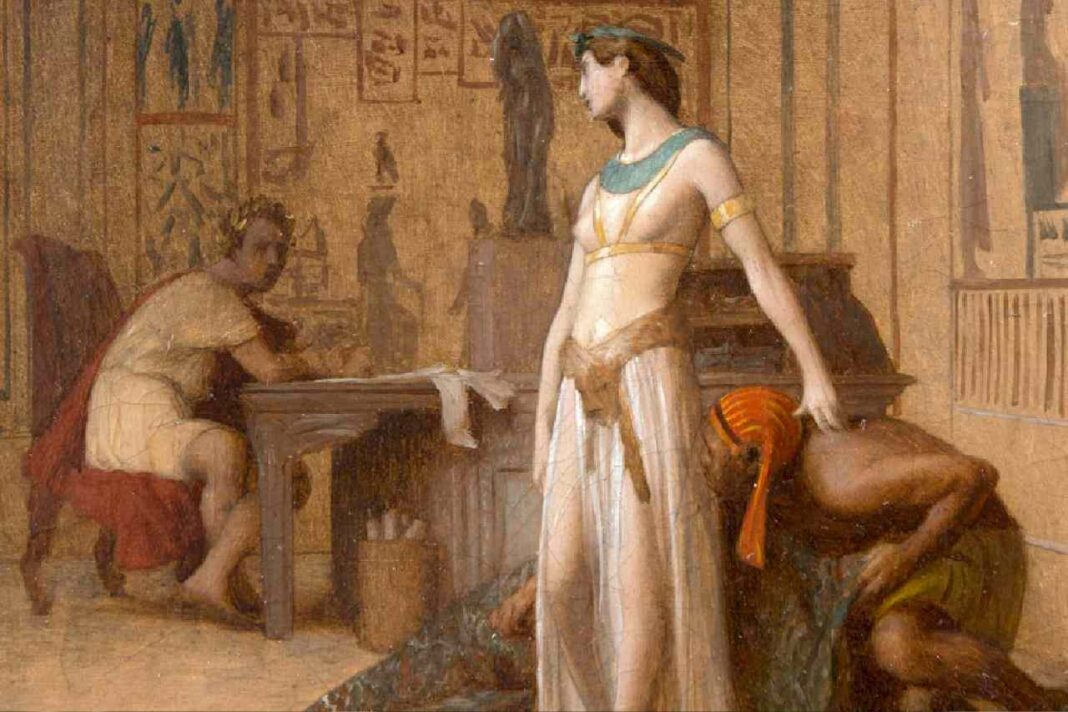

Throughout history, powerful women have faced scrutiny not only for their governance but also for their personal lives. While male rulers engaged in countless affairs without their reputations suffering, women in power were often labeled as temptresses, manipulators, or even sex addicts. These women were not just defined by their sexuality—they were strategic, ambitious, and, in many cases, far ahead of their time.
Yet, history has a way of painting women leaders as either virtuous or scandalous, with little room for complexity. The stories of these six rulers—Cleopatra, Catherine the Great, Empress Theodora, Marie Antoinette, Valeria Messalina, and Ranavalona I—have been twisted by propaganda, myths, and exaggerated accounts of their sex lives. But were they really addicted to sex, or were they simply women who refused to conform to the rigid standards of their time?
—
Cleopatra: The Sexually Charged Queen of Egypt
Cleopatra VII, the last ruler of Egypt’s Ptolemaic dynasty, has been immortalized as the ultimate seductress. From her affairs with Julius Caesar and Mark Antony to the legends of her unquenchable sexual appetite, she has been depicted as a queen who used sex as a political weapon.
One of the most bizarre and sensational claims about her is the story that she created a vibrating sex toy using a gourd filled with agitated bees. While likely a myth, it reflects how Cleopatra’s sexuality has been exaggerated over the centuries.
Her relationships with Caesar and Mark Antony were not purely about sex—they were about power. She was a brilliant strategist who understood that forming intimate bonds with Rome’s most powerful men would help secure her kingdom. Yet, Roman historians chose to portray her as a sex addict, a woman whose influence stemmed not from intelligence but from her sexual prowess.
The irony is that male rulers of her time engaged in equal—if not greater—sexual excesses without being reduced to their conquests. Cleopatra, however, remains the subject of eroticized storytelling that overshadows her political achievements.
Was She a Sex Addict?
While history has painted Cleopatra as a woman obsessed with sex, the reality is that she was obsessed with survival and power. Her affairs were strategic, not compulsive.
—
Catherine the Great: The Lustful Empress?
Catherine II of Russia, known as Catherine the Great, was one of history’s most effective and influential rulers. She modernized Russia, expanded its borders, and introduced critical reforms. But much of what is remembered about her revolves around her supposed insatiable sex drive.
Stories of Catherine’s numerous lovers—including many younger men—have led to the perception that she was a sex addict. One of the most persistent (and absurd) rumors claims that she died while attempting to have sex with a horse. This slanderous myth, meant to demean her, highlights how powerful women are often reduced to their sexuality.
Catherine’s lovers were not just objects of desire; they were trusted advisors. Many of them received political appointments, reflecting her ability to blend personal and political strategy. Rather than being consumed by sex, she was a ruler who sought companionship and loyalty in a society that refused to recognize a woman’s right to rule alone.
Was She a Sex Addict?
The rumors about Catherine’s sexual exploits have little historical basis. She was sexually active, but the idea that she was addicted to sex is largely a misogynistic attempt to discredit her power.
—
Empress Theodora: From Sex Worker to Imperial Powerhouse
Empress Theodora’s rise from being an actress (a profession often linked to sex work in Byzantine society) to one of the most powerful women in history is a story of resilience. Her past, however, became a tool for her enemies to brand her as a woman of uncontrolled sexual desire.
Before marrying Emperor Justinian I, Theodora was a performer in Constantinople. Some historical accounts claim she engaged in public sexual acts and had countless lovers. These narratives paint her as a woman whose rise to power was due to her sexual allure rather than her intelligence.
However, once in power, Theodora proved herself to be a strong and competent ruler. She pushed for women’s rights, fought against human trafficking, and reshaped Byzantine laws to protect women. The idea that she was a sex addict, rather than a reformer, was likely propaganda designed to undermine her influence.
Was She a Sex Addict?
There is no evidence that Theodora was addicted to sex. Her past was used against her, but her rule was defined by intellect and strategy, not sexual compulsion.
—
Marie Antoinette: The Scandalous Queen of France?
Marie Antoinette has long been painted as a queen who indulged in excess—both in luxury and in her personal life. Rumors of her sex life ran wild during the French Revolution, with pamphlets accusing her of everything from orgies to incest.
Much of this was pure propaganda. While she was not a perfect ruler, her sexual behavior was likely exaggerated to justify the revolutionaries’ desire to see her dethroned and executed.
Her struggles with her husband, Louis XVI, were real, but they were not due to infidelity on her part. Historians now believe that their lack of children early in their marriage was due to a medical issue, not a lack of attraction or promiscuity on Marie’s part.
Was She a Sex Addict?
No. The rumors about Marie Antoinette’s sex life were politically motivated and designed to turn public sentiment against her.
—
Valeria Messalina: Rome’s Most Infamous Nymphomaniac?
Messalina, the wife of Emperor Claudius, is perhaps the woman most associated with the term “sex addict” in history. Ancient sources describe her as a woman whose desire for sex was uncontrollable.
One of the most famous (and likely exaggerated) stories about Messalina is that she once challenged a prostitute to see who could have sex with the most men in a single night—and won.
While these stories make for sensational reading, they were likely exaggerated by her political enemies. In Rome, where power was often secured through strategic marriages and betrayals, Messalina’s downfall may have had more to do with her political maneuvers than her sex life.
Was She a Sex Addict?
It’s impossible to know the truth, but the extreme nature of these accounts suggests they were meant to discredit her rather than accurately describe her behavior.
—
Ranavalona I: The Ruthless Queen Who Defied European Norms
Ranavalona I of Madagascar was feared by many, particularly European colonizers. She resisted European influence, enforced strict rule, and eliminated threats to her power.
Her personal life was just as controversial. Some accounts claim she had numerous lovers and disposed of them when they no longer pleased her. These narratives may have been exaggerated by Europeans who saw her as an obstacle to colonization.
Unlike the other women on this list, Ranavalona was not accused of being a sex addict, but her personal relationships were still used to paint her as an unpredictable and cruel leader.
Was She a Sex Addict?
No, but like many powerful women, her personal choices were scrutinized more than those of male rulers.
—
Conclusion: Sex, Power, and the Price Women Paid
The women on this list were far more than the sum of their sexual lives. They were rulers, strategists, and reformers. Yet, history has disproportionately focused on their relationships rather than their governance.
Labeling them as sex addicts was often a way to undermine their authority and discredit their achievements. The same behaviors that were ignored—or even admired—in men became scandalous when women engaged in them.
It’s time to look beyond the myths and recognize these women for what they were: powerful leaders who refused to conform to the expectations of their time.